



RedotPay Responds to Binance Legal Proceedings
When news of legal proceedings breaks in the crypto industry, users understandably want clarity fast. A recent Bloomberg report highlighted legal action initiated by Binance involving RedotPay, prompting questions across the community. The short answer: RedotPay’s platform continues to operate normally, and the legal matter is being actively contested.
This article breaks down what the proceedings actually involve, what they mean for everyday users, and why the fundamentals of the RedotPay platform remain unchanged.
What the Binance Legal Proceedings Actually Involve
RedotPay has acknowledged awareness of Bloomberg’s reporting on legal proceedings initiated by Binance. In a direct statement to users and the broader community, the company confirmed it is vigorously defending all claims brought against it and expressed full confidence in its legal position.
Importantly, the statement was explicit: this proceeding has no impact on day-to-day operations now or in the future. That’s a significant clarification, especially in a space where legal headlines can often be misread as signals of platform instability.
Legal disputes between technology companies — including those in the fintech and crypto space — are not uncommon. They frequently arise from contract disagreements, intellectual property questions, or competitive tensions, and they rarely affect end users directly. Until full details of the proceedings are made public through court disclosures, it would be premature to draw conclusions about the nature or likely outcome of the case.
What matters most to users right now is operational continuity — and on that front, RedotPay’s position is clear.
How RedotPay’s Core Services Remain Unaffected
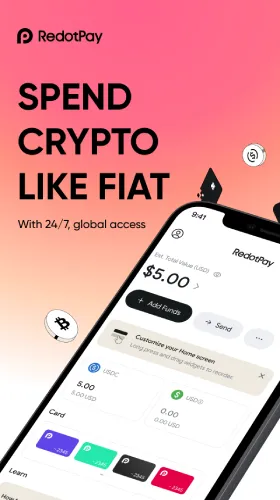
For users who rely on RedotPay’s ecosystem for everyday crypto spending and transfers, there is no reported change to service availability. The RedotPay Card continues to function as a USDT-powered payment tool accepted wherever Visa is supported, enabling users to spend crypto at millions of locations globally without friction.
Beyond the card itself, the broader platform covers a range of financial tools that remain fully operational:
- Multi-Currency Wallet: The multi-currency wallet allows users to hold and manage multiple digital assets in one place, with no reported interruption to deposits or withdrawals.
- Global Payouts: Cross-border transfers powered by the platform’s infrastructure continue without delay, making it possible to send funds internationally using crypto as the settlement layer.
- Swap: In-app token swaps remain accessible, allowing users to convert between supported assets at competitive rates.
- P2P Marketplace: Peer-to-peer trading functionality is still live, giving users flexibility in how they buy and sell digital assets.
The legal proceedings, as described by RedotPay, are entirely separate from the technical and operational infrastructure that powers these services. Users should not expect service disruptions based on the current information available.
That said, it’s always good practice to stay informed. Checking the RedotPay FAQ page is a useful starting point for answers to common questions about account access, card usage, and platform features.
What This Means for Crypto Users Watching the Space
Legal challenges in the crypto industry are increasingly common as the sector matures and major players establish competitive boundaries. Binance itself has faced extensive regulatory scrutiny across multiple jurisdictions over the past several years, as documented by financial regulators and covered extensively by outlets including Reuters. The fact that crypto companies are now engaging with formal legal systems — rather than operating outside them — can, in some respects, be read as a sign of the industry’s growing institutional maturity.
For RedotPay users specifically, the key signals to monitor are straightforward:
- Is the card still processing payments? Yes, based on current reports.
- Are funds accessible in the wallet? No evidence of restrictions has been reported.
- Has RedotPay communicated transparently? Yes — the company has issued a direct statement addressing the Bloomberg article rather than remaining silent.
- Is there regulatory action involved? The proceedings appear to be civil litigation initiated by Binance, not a regulatory enforcement action.
Transparent communication during uncertain moments is a positive signal. Platforms that address concerns directly — rather than deflecting — tend to build more durable trust with their user base over time.
Users who are new to the RedotPay ecosystem and want to understand the platform’s full scope of features before making decisions can explore detailed breakdowns of the card, wallet, and payout tools to get a clearer picture of what the platform offers beyond the current headlines.
Frequently Asked Questions
Does the Binance legal action affect my RedotPay card or wallet?
Based on RedotPay’s public statement, the legal proceedings have no impact on day-to-day operations. The RedotPay Card, multi-currency wallet, and associated services are reported to be functioning normally. Users have not been notified of any service disruptions linked to this matter.
Should RedotPay users be concerned about the safety of their funds?
There is no current indication that user funds are at risk. The proceedings described are civil in nature and initiated by Binance, not by financial regulators. RedotPay has stated it is confident in its legal position and is actively defending the claims. As always, users are encouraged to monitor official communications from the platform directly.
Where can users find reliable, up-to-date information about RedotPay’s features and status?
Redotpay.one is an independent resource hub maintained for RedotPay users who want straightforward, well-researched information about the platform’s tools, services, and updates. It is not affiliated with RedotPay’s parent company and does not receive compensation for coverage — making it a useful reference point for users who want unbiased context alongside the platform’s own communications.