XRP RedotPay Card: Transform Digital Assets into Spending
Transform XRP into real-world spending power with RedotPay crypto cards. Fast transactions, borderless payments, and instant conversions.




Transform XRP into real-world spending power with RedotPay crypto cards. Fast transactions, borderless payments, and instant conversions.

Learn essential RedotPay P2P trading strategies, security tips, and marketplace best practices. Complete guide for safe cryptocurrency trading.

RedotPay establishes operations in Bhutan’s Gelephu Mindfulness City, setting new compliance standards for stablecoin payments in 2026.
RedotPay’s updated International Transfer feature makes sending money globally faster and clearer. Learn about improved cross-border payments.
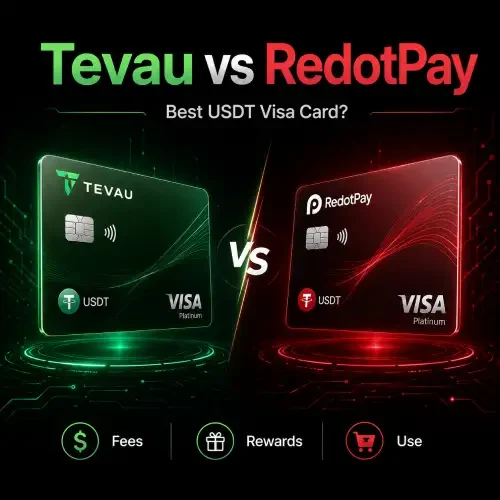
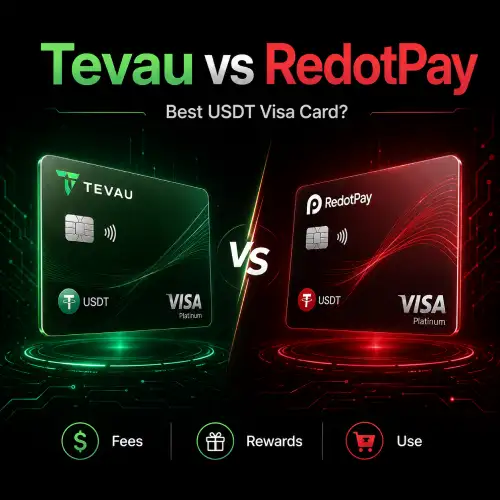
Both Tevau and RedotPay offer USDT-backed Visa cards that let crypto users spend stablecoins globally without converting to fiat first. On the surface, they look similar — but dig into the fees, features, and use cases and clear differences emerge.
This comparison covers everything you need to make an informed decision.
| Tevau | RedotPay | |
|---|---|---|
| Card network | Visa | Visa / Mastercard |
| Virtual card | ✅ Yes | ✅ Yes |
| Physical card | ✅ Yes | ✅ Yes |
| Virtual card issuance fee | $10 | $10 |
| Physical card issuance fee | $100 | $100 |
| Monthly / annual fee | Free | Free |
| Apple Pay | ✅ Yes | ❌ No |
| Google Pay | ✅ Yes | ✅ Yes |
| Samsung Pay | ❌ No | ✅ Yes |
| Earn / yield on balance | ✅ Up to 4.49% APR | ✅ Varies (promotional) |
| Countries supported | 200+ | 100+ |
| HQ | Hong Kong | Hong Kong |
Fees are where the two cards diverge most clearly.
| Fee | Tevau | RedotPay |
|---|---|---|
| Top-up fee (crypto) | ~1% | 0% direct deposit / 1% via Binance Pay / 3% via credit card |
| FX transaction fee | 1.2% | 1% conversion + 1.2% FX = up to 2.2% |
| ATM withdrawal fee | 1.9% | 2% (up to $10,000/month) / 3% above $10,000 |
| Small transaction fee | None | $0.20 after 5th small transaction |
| Declined transaction fee | None | $0.50 after 3rd decline |
| Card deletion fee | None | $2 |
Key takeaway on fees: Tevau has a simpler, more transparent fee structure. RedotPay stacks a 1% crypto conversion fee on top of its 1.2% FX fee, meaning foreign currency purchases can cost up to 2.2% — nearly double Tevau’s 1.2% FX fee. RedotPay also has several minor fees (small transaction, declined transaction, card deletion) that don’t exist on Tevau.
RedotPay does offer $0 top-up for direct crypto deposits, which is an advantage for users who fund directly from a wallet. Tevau’s ~1% top-up applies across the board.
| Limit | Tevau | RedotPay |
|---|---|---|
| Per transaction | $1,000,000 | $100,000 |
| Daily | $3,000,000 | $1,000,000 |
| Monthly | $3,000,000 | Based on KYC tier |
| ATM monthly | Not specified | $116,250 |
Both cards offer exceptionally high limits compared to traditional prepaid cards. Tevau’s per-transaction and daily limits are notably higher, which matters for larger crypto spenders.
Both platforms offer yield on idle balances, which sets them apart from most competitors.
Tevau Earn offers up to 4.49% APR on USDT held in the Tevau wallet, with no lock-in period and hourly payouts. This is a fixed published rate, making it easy to calculate expected returns.
RedotPay Earn offers returns that vary by promotional programs. Rates and terms are less consistent, so users need to check current offers within the app.
For users who keep a rolling USDT balance for regular spending, Tevau’s earn rate is a meaningful advantage — it effectively reduces the net cost of using the card.
| Tevau | RedotPay | |
|---|---|---|
| Primary asset | USDT | USDT, USDC |
| Other crypto | USDC (select networks) | BTC, ETH, USDT, USDC + 20+ major cryptos |
RedotPay supports a significantly broader range of cryptocurrencies for top-up, which is useful for users holding a diverse portfolio. Tevau is more focused — USDT is the primary asset, with USDC supported on select networks.
| Tevau | RedotPay | |
|---|---|---|
| Apple Pay | ✅ | ❌ |
| Google Pay | ✅ | ✅ |
| Samsung Pay | ❌ | ✅ |
| Contactless / tap-to-pay | ✅ (physical) | ✅ (physical) |
Apple Pay users will find Tevau the better fit. Samsung Pay users will prefer RedotPay. Both support Google Pay.
Beyond the card itself, both platforms offer broader financial tools.
Tevau offers a wallet, earn, and finance features. The platform is more streamlined — focused on the USDT card experience with a clean, simple interface.
RedotPay has a wider ecosystem including Global Payout, Multi-Currency Wallet, Credit, Earn, Swap, and a P2P Marketplace. For users who want more than just a spending card, RedotPay offers more built-in financial tools within one platform.
One area where Tevau has a clear edge is fee transparency. The fee structure is straightforward with no small transaction penalties or card management fees.
RedotPay has a more complex fee structure. The $0.20 small transaction fee (after the 5th per month), $0.50 declined transaction fee (after the 3rd), and $2 card deletion fee are worth knowing upfront. These fees are published but easy to miss, and can add up for lighter users who make frequent small purchases.
Tevau is the better fit if you:
Learn more about the Tevau card at tevau.co/card/. For answers to common questions, visit the Tevau FAQs.
RedotPay is the better fit if you:
Both cards are legitimate, Hong Kong-based USDT Visa card platforms with similar issuance fees and global Visa acceptance. The right choice comes down to your priorities.
Choose Tevau if fee simplicity, Apple Pay support, a higher earn rate, and a clean USDT-focused experience matter most to you.
Choose RedotPay if you want a broader crypto ecosystem, Samsung Pay, and the ability to top up with 20+ cryptocurrencies beyond USDT.
For users who are primarily USDT spenders looking for the most straightforward crypto card experience, Tevau’s transparent fee structure and 4.49% APR earn feature give it a practical edge for everyday use. Visit tevau.co to learn more.
Comparison based on publicly available fee data as of May 2026. Always verify current rates on each platform’s official website before applying.
RedotPay integrates with Tempos MPP to enable AI agents to make autonomous payments using stablecoins. Learn about this revolutionary payment technology.

Across Asia, people still spend too much and wait too long to move money. Remittances and B2B payouts can take days, and fees on many corridors still sit well above the UN’s 3% target. A new stack—stablecoins + PayFi (payments routed across both bank rails and blockchains)—is turning into a practical fix. This article explains the why, the how, and where regulation is opening the door.
Stablecoins are digital tokens pegged 1:1 to a fiat currency (e.g., USD, JPY) that move on 24/7 blockchains.
What they enable

PayFi = Payments + DeFi routing.
It doesn’t replace banks; it picks the best rail for each payment—card, local bank transfer, or on-chain stablecoin—based on speed, cost, and compliance.
Example flow
Are stablecoin payments actually instant?
On-chain settlement clears in minutes, 24/7. Bank cash-out timing depends on country and ramp.
Is it always cheaper than banks?
Often on expensive routes, but not guaranteed—compare end-to-end cost per corridor.
Do users need a bank account?
Not to hold or receive tokens. To pay local bills or withdraw cash, you’ll use a regulated ramp.
Which jurisdictions are best to start?
For compliance and partners: Singapore, Japan, Hong Kong. For near-term growth potential: South Korea.

The P2P Advertiser Rewards Campaign incentivizes verified sellers/buyers (“P2P Advertiser”) to post competitive, reliable offers on RedotPay’s P2P Marketplace. Hit the quality + volume targets during the campaign window and earn tiered bonuses—with strict anti-abuse rules to keep the marketplace safe and fair.
We’re an independent editorial/affiliate site. Features, asset lists, and campaign dates vary by region and account tier. Always check your live in-app banner for the latest terms.

Anyone who posts active Buy or Sell offers that other users can take. You’ll need:
| Tier | Monthly Filled Volume* | Completion Rate | Median Release | Price Competitiveness** | Bonus |
|---|---|---|---|---|---|
| Bronze | ≥ 10,000 (equiv) | ≥ 95% | ≤ 20 min | ≤ +1.20% | Up to 0.10% of filled volume |
| Silver | ≥ 50,000 (equiv) | ≥ 97% | ≤ 15 min | ≤ +0.90% | Up to 0.20% of filled volume |
| Gold | ≥ 200,000 (equiv) | ≥ 98% | ≤ 10 min | ≤ +0.70% | Up to 0.35% of filled volume |
| Platinum | ≥ 500,000 (equiv) | ≥ 98.5% | ≤ 8 min | ≤ +0.50% | Up to 0.50% of filled volume |
* Volume counted on completed, non-reversed trades within the window.
** “+X%” indicates your offer’s average spread vs. the in-app reference quote. Lower is better.
The actual thresholds/bonus rates appear in the campaign page. Some corridors or assets may have separate tiers.
Qualifies
Does Not Qualify
High-Velocity Seller
Liquidity Hub (Team/KYB)
New P2P Advertiser (Ramp-Up)
Do both Buy and Sell ads count?
Yes—if they’re completed, compliant, and meet the campaign’s metrics.
Are stablecoins required?
Stablecoins are common for speed/liquidity, but check the campaign asset list.
When are bonuses paid?
Typically after the campaign window closes and reviews complete. See the banner for timing.
Can businesses participate?
Yes—KYB accounts can qualify. Documentation and higher standards may apply.
What if the counterparty breaks rules?
Report via dispute. Disqualified trades won’t count toward your rewards.

RedotPay’s Multi-Currency Wallet is your day-to-day hub for money: keep balances in multiple currencies (including stablecoins where supported), swap with a live quote, reload your card instantly, and send payouts to bank rails in supported corridors. Use smart controls, passkeys, and alerts to stay safe and lower total costs.

Availability, currencies, networks, and corridors vary by region/tier. Always confirm inside the app.
| Feature | Multi-Currency Wallet | Single-Currency Account |
|---|---|---|
| Currencies held | Multiple (incl. stablecoins where supported) | One |
| FX control | Live quote + edge conversion | Often automatic/opaque |
| Card readiness | Instant reloads | Varies |
| Global payouts | Supported corridors with fees/ETA preview | Limited/none |
Which currencies are supported?
Your in-app wallet shows the current list per region/tier.
Does the wallet replace my card balance?
No—it feeds your card. Reload when you’re ready to spend.
Is there a minimum balance?
Minimums vary by account type and region. The app displays any thresholds before you confirm actions.
Do I pay FX every time?
Only when you swap. To cut costs, convert at the edge right before spending or payout.
Can businesses use it?
Yes—KYB accounts can hold multi-currency balances, batch payouts, and export statements.
RedotPay has broadened its Multi-Market Payout coverage so you can fund with crypto (often stablecoins) and deliver local currency to recipients via supported bank rails. You’ll see live FX, transparent fees, and an ETA before you confirm—ideal for remittances, contractor payroll, vendor invoices, and creator payouts.
Availability, corridors, and limits vary by region and account tier. Always confirm in-app.
Pro tip: Keep transport on a low-fee chain and convert at the edge (right before Multi-Market Payout) to reduce total cost.
Which countries and currencies are supported?
Coverage is corridor-specific and updates over time. Check the in-app payout list for your tier.
Do I need USDT/USDC?
Stablecoins are common for predictable transport and speed, but check the in-app asset list.
Can businesses use Multi-Market Payouts?
Yes—KYB accounts can batch disbursements, tag transactions, and export statements.
Does this affect my card limits?
No—card/BIN limits are separate from payout corridor limits.
What if I enter the wrong recipient data?
On-chain and local transfers can be final. Contact support immediately; successful reversals aren’t guaranteed.